Food desert is a term that has been thrown around in the media, since the early 1990’s. A concise definition of a food desert still does not exist, which makes research and solutions to the concept an ongoing issue. However the USDA defines food deserts as a” part of the country lacking in adequate supply of fresh fruit, vegetables, and other healthy whole foods, usually in impoverished areas. This is largely due to a lack of grocery stores, farmers markets, and healthy food providers”1.
In 2009, an estimated 2.3 million Americans did not own a car and lived over a mile from a supermarket 2. Some obvious facts include that people living in neighborhoods with low availability to healthy foods were 55% less likely to choose good quality foods. When fruits and vegetables are higher in price, there is a greater increase in children’s weight over time 3. Conversely living in neighborhoods with greater healthy food availability lead to a 45% reduced incidence in diabetes and a significantly reduced BMI 3. 71 billion dollars in health care costs due to chronic disease could be saved every year if healthier food options were chosen by Americans.
Solutions have been in place to combat low access, and the food desert gap is closing. Access to food is the highest it has ever been in the United States. Then, why are there still disparities in health and food choices, even in affluent areas? I, and many others, believe that access is only a small part of the problem. Research should go BEYOND mileage, and focus on mobility, cultural appropriateness, affordability, and true quality.
There are a few issues with the food desert definition that perpetuate researchers missing the mark. One is that “quality food” is a broad, and often vague term. Most studies use super markets as an indicator of quality. Yet, as many of us know, supermarkets have overall lower quality produce and meats that may not be culturally appropriate. The Community Food Security Coalitions states that a community can not be considered food secure unless the environment provides nutritionally adequate, affordable, and culturally appropriate food 4 .If we take this in to account, very few, exactly three, studies have focused their efforts with this definition in mind. Sadly, these were done in the San Francisco Bay area, a narrow geographic range. Opportunity cost and culturally appropriate foods seem to be less studied, and could very well be the most important motivating factor behind food choice 5. Studies have demonstrated that the “if you build it, they will come model” has fallen quite flat 6. Cunins and Flint found no significant change in dietary behaviors when a new supermarket opened in a low income Philadelphia neighborhood, and very similar results were also found in Flint, Michigan 6.
The problem with the Food Desert definition is that it is static. Where most people who are afflicted with poor lifestyle choices and eating habits are very mobile. Many low income people in America are on the move, be it local transportation, child care, multiple jobs, or unsafe living conditions. Our model and framework of health is truly for the stationary, privileged subject. We must reframe how health can be obtained in an ever moving urban setting.
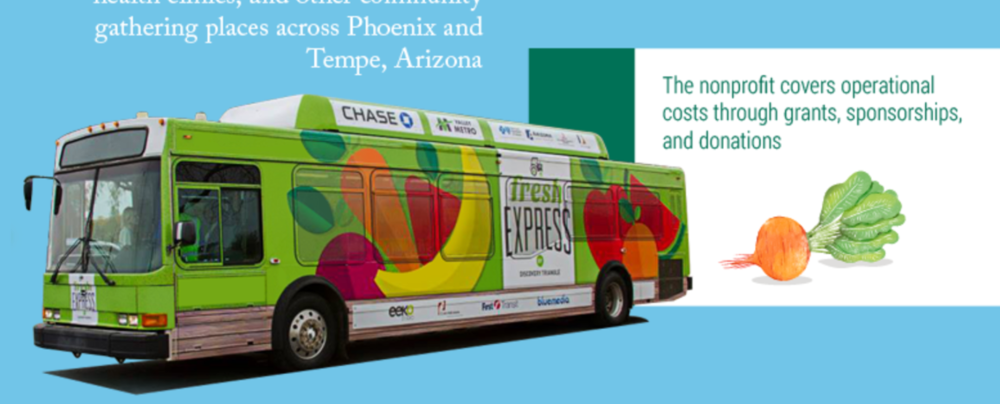
My favorite solution to this problem thus far is the nonprofit mobile grocery store food truck 3. Fresh express is a grocery store on wheels that sells fruit and vegetables to schools, senior centers, apartment complexes, health clinics etc. The Fresh Express purchases food from farmers and sells without markup in Temple and Phoenix, Arizona. Twin Cities Mobile Market is very similar to Fresh Express and serves low income neighborhoods in Minnesota3. More of these models should be used in the Southern United States, and research of their effectiveness is also needed.

I believe, redefining Food Deserts, or changing the word completely is the first step to better solutions. I believe focusing on mobility, opportunity costs of time spent shopping, and cultural appropriateness should be at the forefront of program development. Overall, we must go BEYOND the language of food deserts and focus holistically to start creating a healthier and happier America!

 sprou🌱ing Rx